Cheeze Burger Display Font for Playful Digital Branding
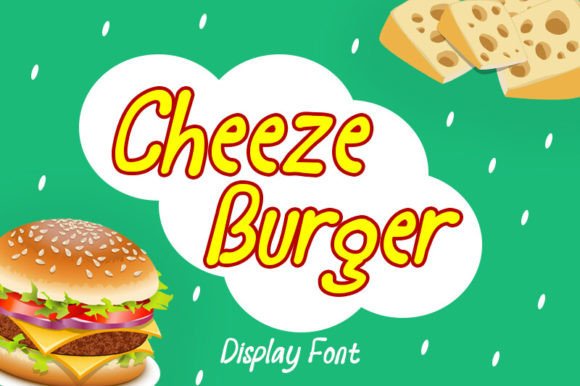
As a web designer who ships landing pages, SaaS dashboards, and boutique e-commerce sites weekly, I reach for Cheeze Burger when I need a display font that communicates joy, approachability, and confident creativity — without sacrificing clarity or digital legibility. Cheeze Burger is a fun and playful display font, designed to inject personality into headers, hero sections, and branded UI elements while holding up across devices and contexts. It’s not just decorative: it’s a strategic typography choice for designers who know that tone starts with type.
Cheeze Burger for Landing Page Hero Headlines and Conversion-Focused Layouts
Cheeze Burger shines brightest where attention is scarce and intent is high: landing page hero sections. Its bold letterforms, subtle bounce in the baseline, and generous x-height make it highly scannable at large sizes — even on mobile. Use Cheeze Burger for primary headlines (H1), subheadings (H2), or short value propositions like “Build Your Dream Site in 30 Minutes” or “No Code. No Stress.” Pair it with a clean, neutral sans serif like Inter or Manrope for body copy to maintain readability and reinforce visual hierarchy. Avoid using Cheeze Burger for paragraphs or long-form text — it’s a display font, built for impact, not endurance.
Cheeze Burger for Online Store Banners and E-Commerce Product Launches
When launching limited-edition collections, seasonal drops, or brand collabs in your Shopify or WooCommerce store, Cheeze Burger adds instant energy to banners, promo strips, and flash sale timers. Its playful character signals freshness and excitement — ideal for lifestyle brands, indie makers, and creative studios. On light backgrounds, use black or deep charcoal for maximum contrast; on dark or image-based banners, opt for crisp white or soft pastel fills with subtle text shadow for readability. Always test on real iOS and Android devices: Cheeze Burger renders cleanly as a WOFF2 webfont, and its OpenType features support basic ligatures and stylistic alternates for added nuance.
Cheeze Burger for Creative Portfolio Websites and Designer Brand Kits
Cheeze Burger isn’t just for fun — it’s a branding amplifier. For freelance designers, illustrators, and motion artists building portfolio sites, this display font becomes part of the voice. Use it in logo lockups (as headline text or monogram accents), project thumbnails, and section dividers — always paired with a restrained supporting typeface to avoid visual fatigue. In Figma or Webflow, apply Cheeze Burger to animated hover states on project cards or sticky navigation highlights to guide user focus. Its consistent stroke weight and rounded terminals ensure it scales gracefully from desktop headers down to tablet-sized feature grids.
Cheeze Burger for Blog Headers and Editorial-Style Digital Content Sections
Even content-heavy sites benefit from Cheeze Burger’s expressive presence — when used intentionally. Apply it to blog post titles, newsletter subject lines, or featured quote blocks to break monotony and signal editorial personality. It works especially well for lifestyle, parenting, education, and wellness blogs where warmth and authenticity matter more than rigid formality. For accessibility, always pair Cheeze Burger with a WCAG-compliant sans serif for body text (minimum 16px, line height ≥1.5), and never rely on it alone for navigation labels or form fields. Its display nature means it belongs in moments of emphasis — not infrastructure.
Cheeze Burger for Mobile App Screens and UI Microcopy with Personality
In mobile-first product design, microcopy carries emotional weight. Cheeze Burger excels in onboarding modals, empty-state illustrations (“You’re all set! 🧀”), or celebratory success banners (“Level Up Unlocked!”). Its friendly proportions and open counters improve recognition at small sizes — but only above 24px. Below that, switch to system fonts or a lightweight sans. When exporting assets for development, confirm Cheeze Burger includes full Latin character sets and supports diacritics for multilingual audiences. Most importantly: verify your license covers app embedding — many display fonts restrict mobile app usage unless explicitly licensed for it.
Cheeze Burger for Branded Email Templates and Social Media Graphics
Email clients and social platforms demand fast-loading, widely supported fonts. Cheeze Burger performs reliably in HTML email headers (via embedded webfont fallbacks) and as vector-based text in Canva, Figma, or Adobe Express graphics. Use it for Instagram story highlights, Pinterest pin titles, or LinkedIn banner text — always with generous padding and contrast-tested background overlays. Since Cheeze Burger is a display font, it pairs effortlessly with system-safe fallbacks like Helvetica Neue or Arial in CSS stacks, ensuring graceful degradation if webfont loading lags.
Cheeze Burger for Course Sales Pages and Digital Learning Platform Headers
Educational products thrive on trust and relatability — two qualities Cheeze Burger conveys instantly. On course sales pages, use it for headline promises (“Learn UI Design Like a Pro”) and instructor name treatments, then anchor with a professional serif (like Merriweather) or modern sans (like Poppins) for curriculum details and testimonials. Its cheerful tone lowers perceived learning barriers without undermining credibility — especially effective for beginner-friendly coding bootcamps, creative workshops, or wellness coaching programs. Just remember: Cheeze Burger is a fonts asset best deployed where emotion and memorability drive conversion, not where dense information density is required.
Cheeze Burger for Responsive Dark Mode Interfaces and Contrast-Safe UI
Dark mode isn’t optional anymore — and Cheeze Burger adapts beautifully. Its balanced letter spacing and moderate contrast hold up against charcoal or navy backgrounds when rendered in off-white (#f0f0f0) or soft yellow (#FFD700). Avoid pure #FFFFFF on true black — it causes glare. Instead, use a subtle 1–2px text shadow (rgba(0,0,0,0.2)) to lift letters off the background. Test legibility at 320px width: Cheeze Burger remains readable in H1/H2 roles on iPhone SE and foldables, provided line length stays under 45 characters per line. As with all display fonts, prioritize performance — serve Cheeze Burger via a fast CDN, preload critical weights, and limit to one or two styles to keep LCP scores healthy.
Cheeze Burger Commercial Licensing for Client Projects and Digital Templates
If you’re a UI designer selling Figma kits, Notion templates, or WordPress themes, confirm your Cheeze Burger license permits redistribution and client use. Most premium display fonts require an extended license for template resale or white-label projects. For personal client work — websites, landing pages, Shopify stores, and SaaS dashboards — the standard desktop + web license typically covers usage across unlimited domains and projects. Always check the included file formats: Cheeze Burger should ship with WOFF2, OTF, and TTF files, plus documentation on variable weight support (if applicable) and recommended CSS font-display strategies.