Holly Font: Romantic Display Fonts for Small Business Branding
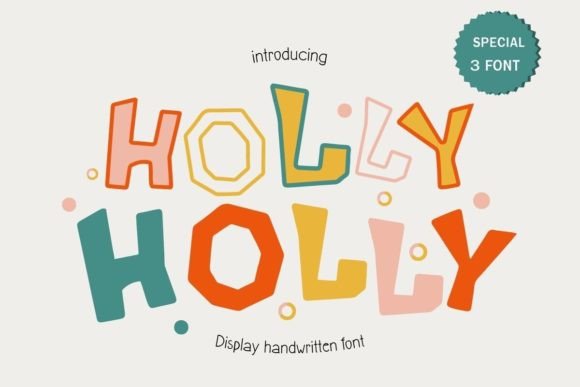
As a small business owner who designs every customer-facing touchpoint—from product labels to Instagram stories—I’ve learned that the right Display font doesn’t just look pretty—it builds trust. Holly is a stylish and playful display font suitable for a wide spectrum of applications. From greeting cards to headlines, this font will guarantee a romantic touch to each of your creations. It’s not just decorative; it’s intentional, memorable, and deeply aligned with brands that want warmth, elegance, and authenticity to shine through.
Holly for Wedding Invitations and Elegant Branding
When your business serves couples—whether you’re a stationery designer, florist, or boutique wedding planner—Holly adds quiet sophistication without sacrificing charm. Its delicate curves and balanced spacing make it ideal for printed wedding invitations, RSVP cards, and digital save-the-dates. Unlike overly ornate script fonts that blur at small sizes, Holly stays legible on 12pt printed text while still feeling luxurious. Pair it with a clean sans serif like Montserrat or Inter for body copy, and you’ll achieve instant visual hierarchy—and professionalism—that clients associate with premium service providers.
Holly for Handmade Product Labels and Packaging Design
If you hand-pour candles, craft botanical soaps, or bottle small-batch syrups, your packaging is your first salesperson. Holly works beautifully on front-of-pack labels where you need a single word—like “Lavender,” “Honey,” or “Velvet”—to evoke feeling, not just function. Because it’s a PUA-encoded Fonts file, you get full access to stylistic alternates and ligatures in design apps like Canva, Adobe Illustrator, or Affinity Designer—no missing glyphs when you export for print. Test it at 18–24pt on matte kraft labels: it reads clearly, feels handmade but polished, and subtly signals care in craftsmanship.
Holly for Café Menus and Local Business Signage
Your café menu isn’t just a list—it’s ambiance. Holly brings a gentle, inviting energy to chalkboard-style menus, laminated countertop displays, and window decals. Used for section headers (“Pastries,” “Specialty Drinks,” “Seasonal Favorites”), it softens the formality of commercial spaces without looking childish. For signage, keep Holly at 36pt or larger on interior acrylic signs or vinyl wall lettering. Avoid using it for full paragraphs—but as a Display font for key moments? It turns functional text into brand storytelling.
Holly for Social Media Graphics and Instagram Story Highlights
On Instagram and Pinterest, attention lasts seconds. Holly stands out in thumbnails and story overlays because its romantic personality cuts through algorithmic noise. Use it for quote graphics (“Slow down. Sip well.”), limited-edition launch banners, or seasonal promo stickers—always over high-contrast backgrounds (cream on charcoal, blush on ivory). Since it’s a PUA Fonts file, you can type accented characters and special symbols directly, no workarounds needed. Bonus: it scales cleanly from mobile screens to desktop previews, making your feed feel cohesive—not chaotic.
Holly for Greeting Cards and Customer Thank-You Touchpoints
That handwritten “thank you” note tucked into a package? It’s one of the highest-ROI brand moments you’ll ever create. With Holly, you don’t need actual handwriting to deliver sincerity. Use it for short, heartfelt phrases on printed thank-you cards, gift tags, or branded stickers inside subscription boxes. Its playful rhythm makes “With love,” “So grateful,” or “Made just for you” feel personal—not templated. And because Holly is designed as a Display font, it avoids the stiffness of formal serifs while staying more refined than casual scripts.
Holly for Boutique Logo Design and Shopfront Branding
Your logo sets the tone before a single product is seen. Holly shines in boutique logos—especially for fashion, apothecary, bridal, or home goods brands where romance, nostalgia, or artisanal warmth are part of the promise. Try it in all caps for a soft yet confident mark, or paired with a minimalist icon (a ribbon, leaf, or monogram). Just remember: Holly is best used at medium-to-large sizes. Reserve it for your primary logo lockup—not tiny favicon versions. For web use, embed it as a webfont with fallbacks, or convert to outlines for SVG exports to ensure consistency across devices.
Holly for Email Headers and Digital Ad Campaigns
Email subject lines and Facebook ad headlines compete for attention in crowded inboxes and feeds. Holly gives your campaigns subtle distinction—without screaming. Use it sparingly in email headers (e.g., “Your Spring Edit Is Here ✨”) or banner ads for seasonal collections. Keep line length tight, contrast high, and always test rendering across Outlook, Gmail, and Apple Mail. As a PUA Fonts file, you retain full control over character mapping—so your “&” or heart symbol appears exactly as intended, every time.
How to Test Holly Before Committing Across Your Brand
Before applying Holly to packaging, website headers, or client deliverables, run three quick checks: First, print a sample label at actual size—does it hold clarity on your chosen paper stock? Second, preview it on your phone’s lock screen—does the romantic mood survive small-scale viewing? Third, ask a trusted customer or colleague: “What feeling does this font give you?” If they say “elegant,” “thoughtful,” or “inviting,” you’re aligned. If they say “hard to read” or “too fancy,” scale back usage—reserve Holly for accents only, and pair it with a highly legible supporting typeface.
Smart Font Pairing Ideas for Holly
Holly thrives when balanced—not buried. Pair it with neutral, humanist sans serifs (like Lato or Open Sans) for digital interfaces and product descriptions. For print-heavy brands—think apothecaries or letterpress studios—try pairing Holly with a warm, low-contrast serif like Merriweather or Playfair Display. Avoid clashing scripts or ultra-thin fonts; let Holly be the expressive voice, and your secondary font the reliable foundation. And always confirm your license covers commercial use—especially for physical products, templates, or resale items.